I haven't been posting much here recently so I've decided to take a few months out.
You can still see stuff as I make it on Instagram and the finished thing on my website

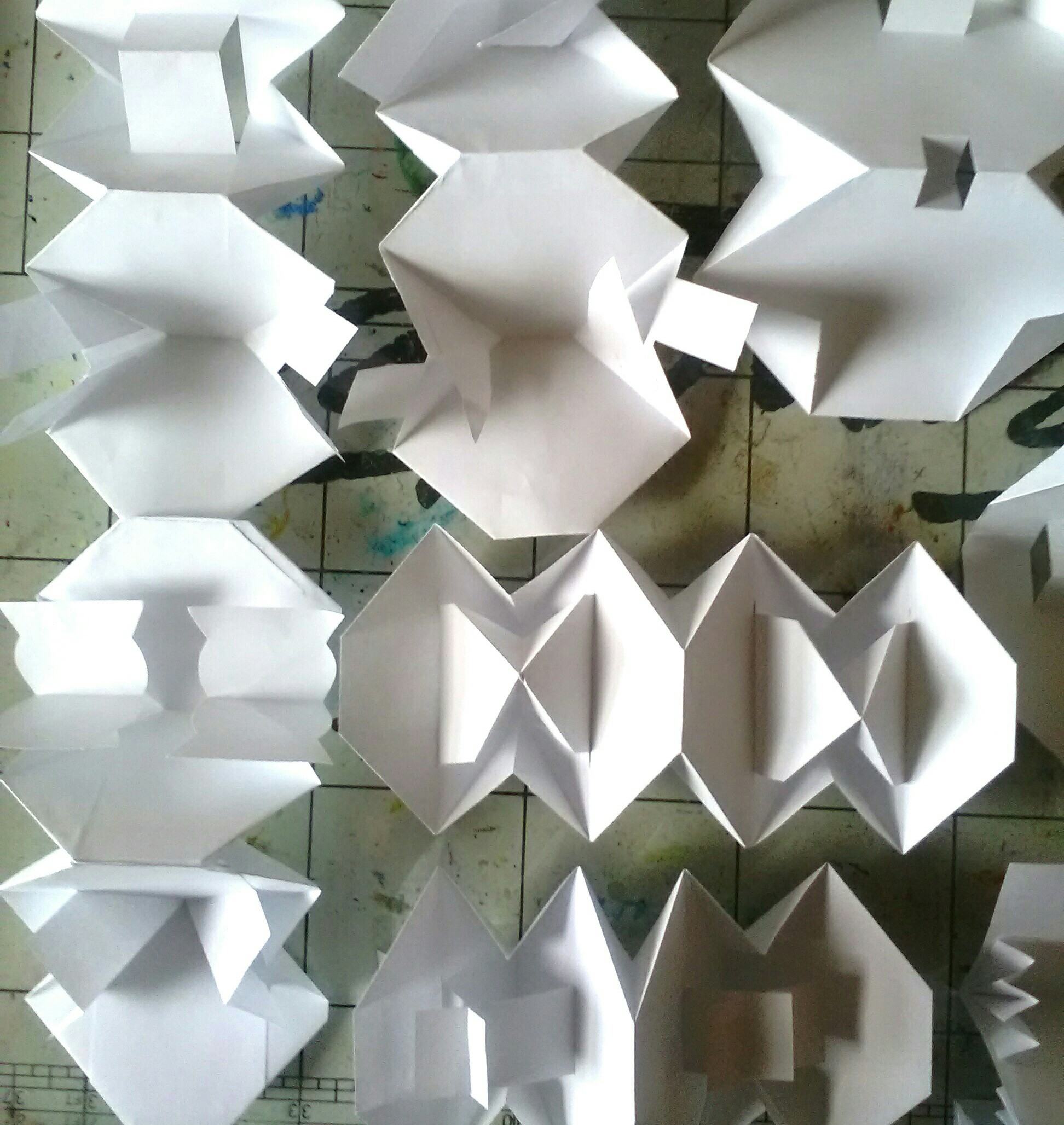
I've been exploring cut edges and paper lithography and making a sculptural book structure.

I've had a bit of a rest from Mad, Bad...
Two prints of one of my favourite subjects, dilapidated buildings.


Thanks to the awful wind and rain we've had for the past few days I've made a start on the pop up project based on Jill Reidy's talk and photos. A good excuse to revisit my photos and memories of warmer weather


Slowly moving this forward.
%20%E2%80%A2%20Instagram%20photos%20and%20videos.png)
%20%E2%80%A2%20Instagram%20photos%20and%20videos.png)
The latest archive project that I am involved in has the title of ‘Mad, Bad and Dangerous to Know’.
I’ve found it quite difficult to get into.
There is a wealth of information in the Lancashire archives from constabulary and hospital records which not only have details of peoples crimes/condition but also contain photographs. The stories are in the main very sad, coming out of illness and/or poverty. It didn’t seem right to use them as fodder.
I started to type key phrases, such as ‘highway robbery’ into the archive database to see what these would produce and came across a collection of printed police handbills from the 1870’s.
They were distributed round various police stations and posted on the streets asking for information about various crimes/criminals. The use of language in some of these is fascinating and even if they come with a name it doesn’t feel intrusive unlike the hand written records and photographs.
I’m playing with format at the moment. I don’t want to produce a flat image and would like something to tell some of the stories that jumped out at me.
I had thought about making a toy theatre but I’m interested in the characters and figures on a stage can tend to get a bit lost in the space. So I’m trying something on a smaller scale
One of the references in the catalogue reads ” Warrington - Stolen Duck and Nest of eggs from premises of Rev. Frank Hopweed, Bewsey Hall - Reward 2 guineas”. I found the document and based on the information (and artistic license) I’ve made a couple of quick collagraph prints


I seem to have a lot of different things on at the moment. All of them very much at the experimental and thinking about them stage.

Starting to play with ideas for Mad, Bad and Dangerous to Know, the latest project in conjunction with Lancashire Archives.


Just spent the day at Hot Bed Press printing my contribution to the 20:20.


Think it must be the first time I've not left it till the last minute.
More gum arabic portraits and objects printed on paper and organza. I think there's a lot of potential in using organza for overlaying images. I won't have time to explore it in this project. The deadline with drying time is about the begining of September. But I will be coming back to it later.


Not sure where I'm going to go with this but I'm exploring printing on different surfaces.
On paper ...


A group of us are starting a quick project at the Lancashire archives for exhibition in September. It's based on the work of John Mercer, dyer, chemist and early salt print pioneer.
In response to one of his sets of prints (same image different colour ways) I found myself asking questions . Who is the boy? Do the props say anything about him? Or about John Mercer’s musical and scientific interests? Is the setting significant? What is that building?
OR could it be simply set outside for light using a collection of stuff that was to hand to see how the detail would work in print.
My instinct is to try and make a story out of the image.
I’ve started by making images containing a person and several objects.

As characters I used people taken from family photos, mainly Victorian or Edwardian and added ‘props’ from my own photos or scans of objects


And as some of the images held by the archive are printed on fabric I’ve also printed onto thin cotton.

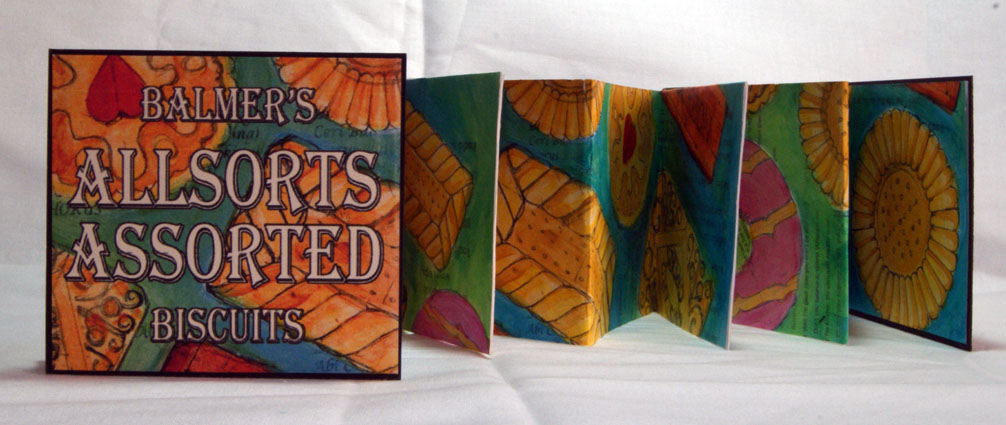
The theme for NWBA this month is biscuits.
I associate factory biscuits with committee meetings and tea breaks, especially the drama group I belonged to for the best part of thirty years (St Andrews and Tanterton Allsorts to give it its full name).
I wasn't sure what to do for this so I started line drawings of biscuits,


I’ve recently taken part in “All life is here”, a project at the Lancashire Archives , making a visual response to quarter sessions petitions from the 17th century.
Because of the short time scale for this work, about 2 months, I chose to use as my inspiration the seven documents from the period that were accessible on line as a transcription and accompanied by a good quality photograph.
All seven referred to people accused of witchcraft.
Whilst wondering how to tackle the project I vaguely remembered hearing about witch balls and on googling it I found they were real. They are hollow spheres of glass, hung in cottage windows in 17th and 18th century to ward off evil spirits and witches.
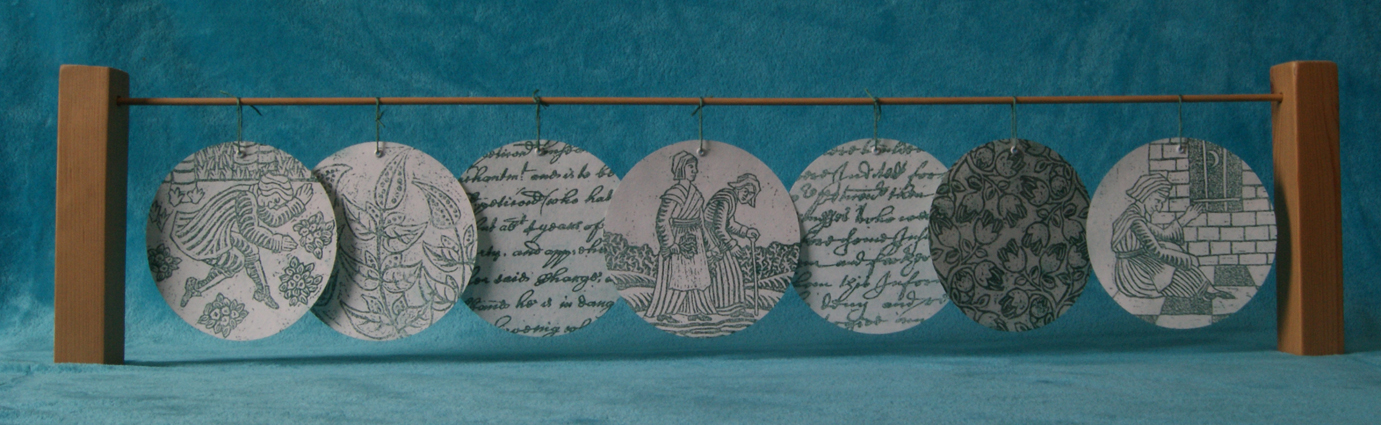
This gave me a circular format to work in.
%20%E2%80%A2%20Instagram%20photos%20and%20videos.png)
Whilst researching further I found a copy of The History of Witches and Wizards (printed in 1720) in the Wellcome foundation’s online resources. I didn’t want to copy from this but decided to use this woodcut style to make illustrations to some of the stories in the archive documents.
I added illustrations of the type of plants that would have been used by healers, again in the same woodcut style, that I derived from historical herbals that were around in this period.
I also decided to use part of the original script of each document.
I decided to use the prints to make two different outcomes, a simple line of double sided prints, one for each document, with text on one side